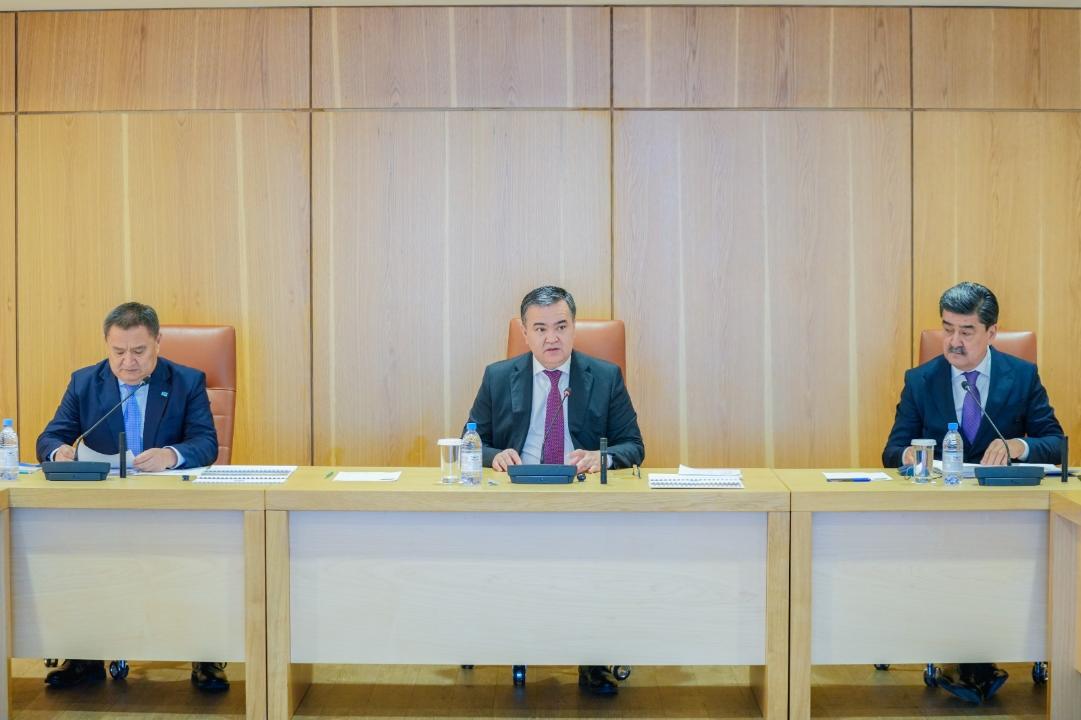
A meeting dedicated to the development of eco-parks in Astana and the surrounding region was held in the capital, the press service of the Akimat of Astana reports. According to Astana’s approved Master Plan until 2035, more than half of the city’s total area — 42,000 hectares out of 79,700 hectares — is designated for green spaces. In recent years, the capital has seen active tree planting and the formation of park clusters.
The meeting was attended by Astana Mayor Zhenis Kassymbek, Akmola Region Governor Marat Akhmetzhanov, Minister of Ecology and Natural Resources of Kazakhstan Yerlan Nysanbayev, as well as representatives of government agencies.
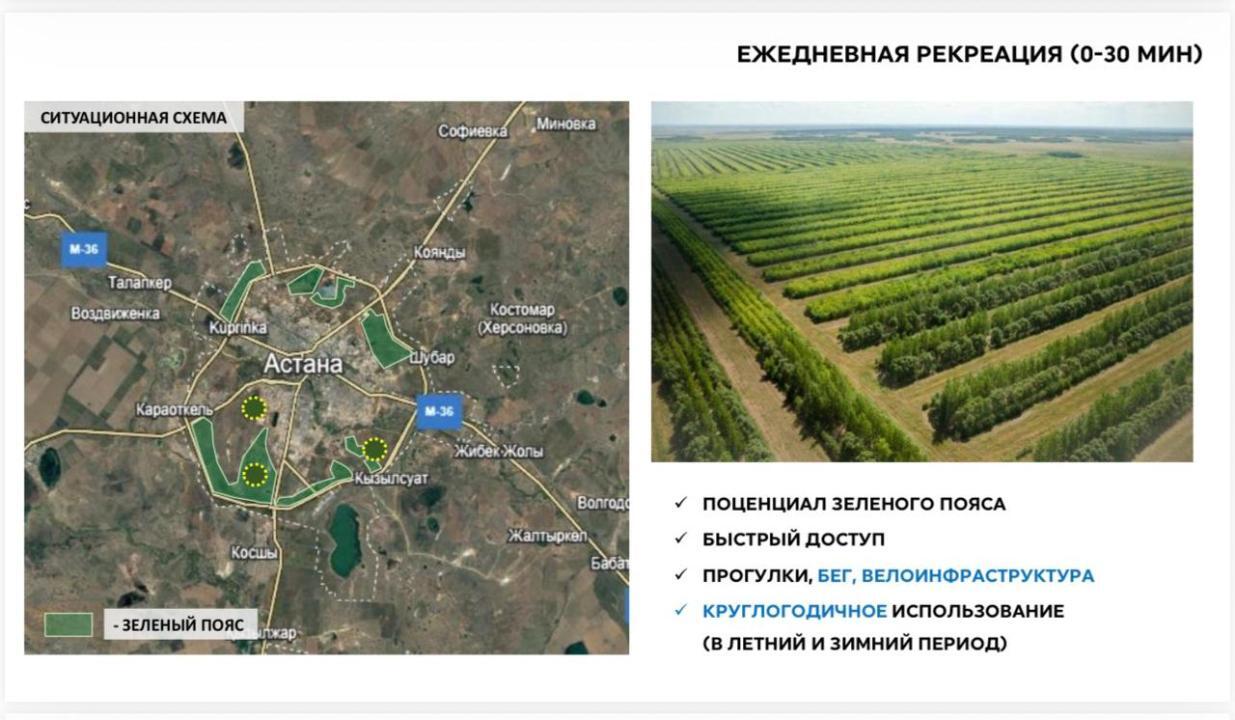
In line with the instruction of the Head of State to create eco-parks in suburban areas of major cities, a number of proposals have been developed within Astana’s Master Plan. The concept предусматривает three types of eco-parks. The first type includes daily recreation eco-parks located within the city, accessible within 30 minutes and suitable for year-round use. The second type covers weekend parks situated near the city boundaries and in suburban areas, with access times of 30–60 minutes and facilities such as family recreation zones, visitor centers, and rental accommodation. The third type includes areas located in Akmola Region, accessible within 60–90 minutes, intended for the development of eco-tourism.
According to Ruslan Zhakupov, Director General of the Research and Design Institute “Astanagenplan,” daily recreation eco-parks within the city will primarily be developed on the territory of the Green Belt of Astana. Forest plantations created as part of the Green Belt project already perform important environmental functions and demonstrate high ecological sustainability. These areas are considered suitable for the development of forest eco-parks with eco-trails, walking routes, and cycling paths. In addition, the city plans to create an eco-park in the area of Small Taldykol Lake. The project focuses on preserving the natural landscape while developing urban recreation. Implementation has already begun: the design and estimate documentation for Section No. 5 is nearing completion, with work on Section No. 7 to follow.
The meeting was attended by Astana Mayor Zhenis Kassymbek, Akmola Region Governor Marat Akhmetzhanov, Minister of Ecology and Natural Resources of Kazakhstan Yerlan Nysanbayev, as well as representatives of government agencies.
In line with the instruction of the Head of State to create eco-parks in suburban areas of major cities, a number of proposals have been developed within Astana’s Master Plan. The concept предусматривает three types of eco-parks. The first type includes daily recreation eco-parks located within the city, accessible within 30 minutes and suitable for year-round use. The second type covers weekend parks situated near the city boundaries and in suburban areas, with access times of 30–60 minutes and facilities such as family recreation zones, visitor centers, and rental accommodation. The third type includes areas located in Akmola Region, accessible within 60–90 minutes, intended for the development of eco-tourism.
According to Ruslan Zhakupov, Director General of the Research and Design Institute “Astanagenplan,” daily recreation eco-parks within the city will primarily be developed on the territory of the Green Belt of Astana. Forest plantations created as part of the Green Belt project already perform important environmental functions and demonstrate high ecological sustainability. These areas are considered suitable for the development of forest eco-parks with eco-trails, walking routes, and cycling paths. In addition, the city plans to create an eco-park in the area of Small Taldykol Lake. The project focuses on preserving the natural landscape while developing urban recreation. Implementation has already begun: the design and estimate documentation for Section No. 5 is nearing completion, with work on Section No. 7 to follow.
As part of the second type — weekend parks — the creation of an eco-park is proposed on a site located partly within the city limits and partly in Tselinograd District, between Lake Maibalyk and the counter-regulator.
Astana Mayor Zhenis Kassymbek emphasized that as the city continues to grow and its population increases, the development of accessible and environmentally friendly recreational areas for residents and visitors remains a key priority. He noted that around 170 courtyard and public spaces, including parks, squares, and boulevards, are improved annually in the capital, with approximately one million trees and shrubs planted each year. Joint efforts with Akmola Region will continue to expand and create new eco-parks outside the city.
Akmola Region Governor Marat Akhmetzhanov highlighted the region’s strong potential for developing various types of tourism. The presence of state national natural parks such as Burabay, Kokshetau, and Buyratau, as well as the Korgalzhyn Nature Reserve, creates significant opportunities for recreation, particularly for domestic tourists. The Burabay resort welcomes up to 1.5 million visitors annually, around 60% of whom are residents of Astana.
Within the framework of the Head of State’s instruction to develop eco-parks around the capital and reduce recreational pressure on the Burabay resort, alternative locations for eco-parks have been identified in Akkol, Arshalyn, and Tselinograd districts, as well as in the city of Kosshy. The diversity of natural resources in the suburban area provides strong potential for year-round development of eco-, sports, and agro-tourism.
Head of the Akmola Region Tourism Department Andrey Podgursky reported that the region has good prospects for creating eco-parks based on existing recreational areas offering a variety of formats, including nature walks, picnic areas, sports and children’s playgrounds, eco-trails, and event spaces. In addition, plans include the creation of three new eco-parks in Tselinograd and Arshalyn districts.
Source: Press Service of the Akimat of Astana City
Astana Mayor Zhenis Kassymbek emphasized that as the city continues to grow and its population increases, the development of accessible and environmentally friendly recreational areas for residents and visitors remains a key priority. He noted that around 170 courtyard and public spaces, including parks, squares, and boulevards, are improved annually in the capital, with approximately one million trees and shrubs planted each year. Joint efforts with Akmola Region will continue to expand and create new eco-parks outside the city.
Akmola Region Governor Marat Akhmetzhanov highlighted the region’s strong potential for developing various types of tourism. The presence of state national natural parks such as Burabay, Kokshetau, and Buyratau, as well as the Korgalzhyn Nature Reserve, creates significant opportunities for recreation, particularly for domestic tourists. The Burabay resort welcomes up to 1.5 million visitors annually, around 60% of whom are residents of Astana.
Within the framework of the Head of State’s instruction to develop eco-parks around the capital and reduce recreational pressure on the Burabay resort, alternative locations for eco-parks have been identified in Akkol, Arshalyn, and Tselinograd districts, as well as in the city of Kosshy. The diversity of natural resources in the suburban area provides strong potential for year-round development of eco-, sports, and agro-tourism.
Head of the Akmola Region Tourism Department Andrey Podgursky reported that the region has good prospects for creating eco-parks based on existing recreational areas offering a variety of formats, including nature walks, picnic areas, sports and children’s playgrounds, eco-trails, and event spaces. In addition, plans include the creation of three new eco-parks in Tselinograd and Arshalyn districts.
Source: Press Service of the Akimat of Astana City